The $64bn Music Gamble & The Death of Sora | The Media Beat #93
THE MEDIA BEAT — EPISODE 93
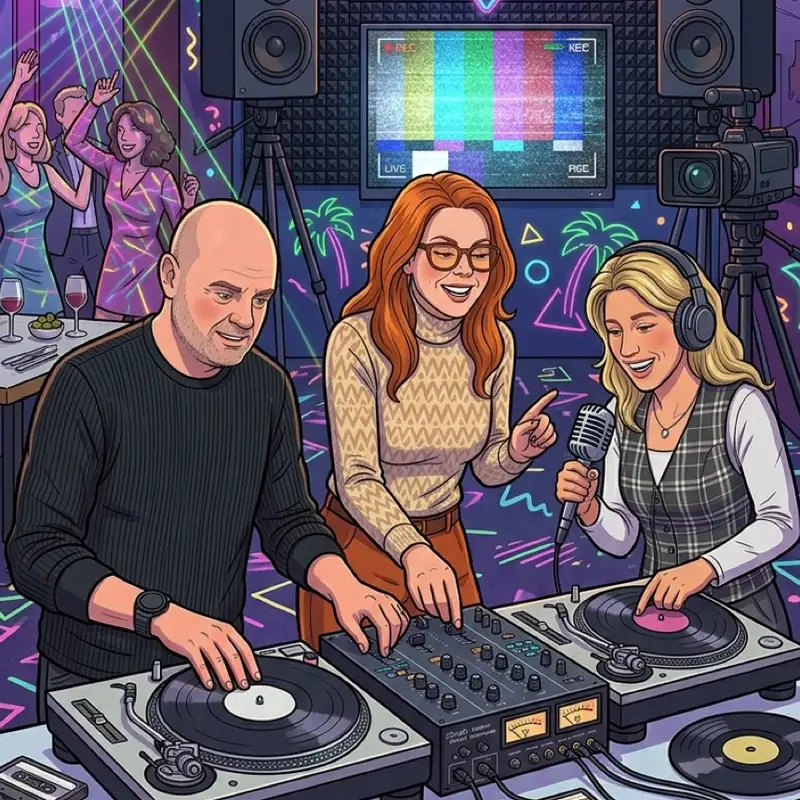
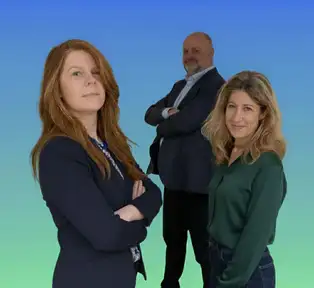
Hosts: Oliver Turnbull, Maureen Kerr, Claire Tavernier
---
INTRO
OLIVER: Hello everybody — lovers of the Media Beat and those who are yet to fall in love with the Media Beat, welcome. It's episode 93, and as I sit here with Maureen and Claire virtually, we're basking in the glow of a wonderful lunch we had yesterday, deep in the heart of Soho in London, to celebrate our fourth anniversary.
Fourth anniversary. It was a wonderful meal — wonderful chat, lots of laughs, lots of memories, and quite a lot of patting ourselves on the back. Very memorable. I enjoyed it immensely. And we got free cabbage, which perhaps we'll come back to. Any meal that comes with free cabbage has got to be a good meal.
Not only that, we've got a fantastic deep dive coming up, which I'm particularly excited about. We're going to be talking about the Paramount-WBD merger, an update on microdramas, OpenAI news, EA, the NFL, Donald Trump, BTS — all sorts of stuff. But the highlight of the first section is the deep dive, and it's about a subject that I love, my kids love: music and music publishing, and how it has changed and revolutionised in recent years. Young people now have access to a wonderful catalogue going back 50 or 60 years, with no snobbery about the era the music comes from — which is one of the most wonderful things to happen in the post-digital world.
Anyway, forget what I think. Let's go to our experts. Claire, take us through the history of music publishing.
---
DEEP DIVE: THE HISTORY OF MUSIC PUBLISHING
CLAIRE: Thank you, Oliver. The reason we decided to do this deep dive is, of course, the news that Pershing Square has just launched a $65 billion takeover bid for Universal Music Group — and we'll come back to that at the end.
Our story today starts in 1887, with the establishment of Columbia Records — the oldest surviving music label brand. There was one before it, Edison Records, created by Thomas Edison, who actually invented recorded music. But Columbia introduced the 10-inch disc and double-sided records, moving us on from wax cylinders.
By the early 20th century, labels were manufacturing and distributing 78 RPM discs, and radio and jukeboxes began to emerge. Then in 1942, something quite interesting happened: the American Federation of Musicians went on strike — for two years. The major labels, RCA Victor and Columbia, were refusing to pay royalties for radio plays. The musicians went on strike and won. It was the first major strike around royalties. They were permitted to record during the strike for the war effort, given that this was during the Second World War.
Also during that period, in the 1930s, we saw the kind of vertical consolidation we've seen in other industries. RCA was originally a radio manufacturer and bought Victor, a music label. CBS bought Columbia. The question of who owns both the players and the content was very much born there.
Moving into the 1950s: this era was dominated by what we'd call the Big Six — massive, global corporate juggernauts — from the 50s through to the 80s. There were a few scandals along the way. The Payola scandal in the US, for instance — labels bribing radio DJs, because at the time the only way to discover new music was through radio play. In 1960, there was a congressional investigation, and several people got into serious trouble, including Alan Freed — the DJ who coined the term "rock and roll."
OLIVER: These are great facts. These are killer lines.
CLAIRE: There'll be a few more. Also during that period — Apple Records, created by the Beatles to get away from EMI. It was really the beginning of artist-owned labels. Management wasn't perfect, but it was an interesting new template, and it signed people like James Taylor.
In parallel, in Detroit — the Motor City — the Motown label was created. They were essentially applying automotive efficiency to music: an assembly line approach to record-making. It was one of the first major indie labels, very focused on a specific sound — the Motown sound.
Then in 1987, Bertelsmann acquired RCA Records and created BMG, which became one of the Big Five.
So that takes us to the late 1980s. Now, into the 1990s — what dominated the music scene? Here's a quiz for you, Oliver. If I say Alan McGee or Nirvana?
OLIVER: Alan McGee — he discovered Oasis. I once stood next to him at a gig and he looked at me like I was something unpleasant on his shoe. So... is it A&R?
CLAIRE: Interesting thought. But the answer is: indie labels really dominated the early 90s. It didn't start with Nirvana exactly, but Nirvana was the first massive success to come from that world. They were originally signed to Sub Pop, a tiny Seattle indie, for $600. Nevermind went to number one in 1992. Then Oasis in 1993 — Alan McGee spotted them at a gig after one song and signed them immediately. Enormous.
But that wasn't the only thing happening in the 90s. At the same time, we had one of the most globally successful releases of all time — Celine Dion. She was signed to Sony, who launched Let's Talk About Love in Japan in 1998 and sold 1.1 million units in a market where foreign acts rarely do so well.
And of course, every few years there was a new format — records, tapes, CDs, MiniDisc — and everyone felt compelled to reinvest their entire savings buying their music library all over again. The big labels loved it.
Then 1999. Napster. As we've discussed in our Spotify deep dives, it completely decoupled the value of the music industry from physical media. That triggered a decade of financial devastation. Global recorded music revenues went from $27 billion to $13 billion in five years — mostly due to piracy. There were some memorable moments. Lars Ulrich of Metallica tried to sue Napster, which did not go down well and rather signalled the old guard not understanding the times.
Finally, in 2009, the majors — primarily Universal and Sony — partnered to launch Vevo, to reclaim some revenue on YouTube. They also began partnering with Spotify. It took them a long time, but eventually the labels said: we have to do something or we'll disappear.
From 2010-2015 onwards, labels completely decoupled from physical content. They became much more data-driven — almost like venture capital firms, really. And it worked. Global revenues reached $31.7 billion in 2025 — the 11th consecutive year of growth after that collapse.
Today: Universal Music Group holds 38% of the market. Artists like Taylor Swift, Drake, Billie Eilish. Sony Music is second at 25% — Beyoncé, Adele, Bad Bunny. Warner Music at 17% — Ed Sheeran, Bruno Mars. Together, the three hold roughly 80% of the industry.
What we're also seeing now is artists opting out of labels entirely — feeling they don't need them in a world without physical media. Chance the Rapper won three Grammys without a label deal. Raye, after being with Polydor, went completely independent. And Taylor Swift — while she is signed with UMG — has a very specific deal in which she retains 100% ownership of her masters. That battle over masters has become the central battleground.
The business model of labels has changed dramatically. Previously, their role was to front the cost of recording, manufacturing, marketing, and distribution. It was a massive gamble — 90% of releases flopped — very much like the film industry model. Now it's much more about the "360 deal": labels take a cut of tours, merch, syncs. Their real value is in discovery — A&R, playlist curation, data analytics, TikTok promotion, TV licensing. It's a different business.
And now, to bring us back to the present: Pershing Square and Bill Ackman. He's tried to buy UMG before and failed. He's back with a huge offer — roughly twice the current stock value — on the basis that the stock is undervalued, the company is undermanaged, and it needs to delist from Amsterdam and move to the New York Stock Exchange. He also wants to move it away from Vincent Bolloré, its main shareholder — a controversial figure in France, not unlike Rupert Murdoch in scale, and quite right-leaning. Ackman's argument is: this would be better for everyone, bring it back to the US, and address the undervaluation linked to the Amsterdam listing and to Bolloré.
That's where I am on music recording. I'll hand over to Maureen. Any questions?
---
MAUREEN: Wow. Let me take a deep breath. I want to come at this from a slightly different angle, because when I look at Bill Ackman's move on Universal, my first instinct isn't to marvel at the valuation or the structure. I want to ask a simple question: is there actually a seller here? Is it up for sale?
Ackman's proposal is out there at $64 billion — a significant sum. His core argument has always been that the stock has never received in Europe the valuation multiple it would command in the US. So he's always wanted a New York listing. This deal would effectively force that question in the boardroom.
The real issue for me is: clever structure is one thing, but getting the key shareholder to engage is another. The loud story is the bid and the valuation. The quieter, more interesting story is the business underneath it — because for more than ten years now, the market itself has been growing, stabilising, and really getting its act together. The attention has gone to ownership and listing geography, but the music business is actually strengthening.
And then there's AI. For the last two years, the dominant story was litigation and fear — labels going after Suno, Udio, and anyone claiming to generate music generatively. But what's happening now is more nuanced. The majors are not retreating — they're going in front-foot first, turning legal leverage into licensing leverage. Rather than trying to litigate these music systems out of existence, they're partnering with them, settling with them, and shaping the commercial terms under which they exist. UMG and Warner have settled with Suno and Udio with an opt-in arrangement for artists. I think that's powerful.
My overall read: whether Ackman gets this done or not, Universal is sitting on a very strong underlying asset. The question is less about whether the music business is broken — it's not, the stats are there — and more about whether the public markets are valuing it correctly. That's where management and the board will spend most of their time.
I'm on the bear side of this. I don't think the deal will be done. But it does bring attention to the situation, and perhaps Ackman gets his way on a US listing. The underlying asset is simply too strong, I think, for him to be given a clear path to acquiring the business.
CLAIRE: It's also worth noting that Universal in particular has really started to lean into AI and has done some very interesting deals. Their approach has changed dramatically over the last 18 months.
MAUREEN: Very strong. And I think they've probably been the bravest of all the media subsectors in saying: let's not spend years litigating — let's get them in the room, do the commercial terms on our terms, and get the artist opt-in situation right.
Of course, independent artists may not have a seat at those negotiations. But the major labels are doing the right thing. And I think the big studios — film, TV, books, publishers, education, business services — are going to look to the music industry and realise they probably have more leverage in negotiations with AI-native companies than they think.
I applaud Warner, Universal, and BMG for moving forward. Sony is still litigating, though — that's a problem. But who knows where that will end up.
OLIVER: Well, dear listener, you've hit the jackpot — you've had Claire Facts and Maureen Predictions, which are the two biggies. We'll be keeping an eye on that prediction. You had the facts, you had the feeling of a stand-up comedian with four killer lines, knowing the audience was going to be open-mouthed. Edison, the Columbia story — brilliant.
And just as a marker of how old I am: my first record player had settings for 7-inch, 10-inch, speed settings at 45, 78, 32, and 16 RPM — which I'm not even sure was a real thing. And even at university when I was DJing, we were still being sent records.
MAUREEN: Oliver, was 16 RPM just... reversing? Going too slow?
OLIVER: No!
CLAIRE: Can I tell you a story about my grandfather? In the early 20th century, he had one of those rare 78 RPM records. He would go into a café in Paris with it, hold it up, and move his head slowly — pretending he was reading the music off it. Because so few people had record players at the time, people actually believed that if you knew what you were doing, you could read the music just by looking at the grooves. As a prank.
MAUREEN: That is the best story of the week. That is a Peter Sellers moment.
OLIVER: What a cool guy.
---
NEWS ROUNDUP
OLIVER: Right, moving on to the news. Maureen, you're our roving reporter stationed outside OpenAI HQ. Everyone knows they've closed Sora, but there's more going on. What's the story?
MAUREEN: Two very different activities from OpenAI this month — end of March into April — and I think together they tell you something about where the company is heading.
First: OpenAI has decided to shut down the Sora web and app experiences. That will be discontinued this month, with the API following in September. Sora — and Sora 2 — was a consumer and enterprise video generation tool. It's been displaced. Google VO, Kling, Sea Dance from China — others have overtaken it. Every videographer and producer I meet is using either Sea Dance or Google VO3. Sora simply couldn't compete.
But at the very same moment it announced that closure, OpenAI made an acquisition. They acquired TBPN — the Technology Business Programming Network — a founder-led technology talk show hosted by John Coogan and Jordi Hayes. It's a daily three-hour live show. It has had guests like Mark Zuckerberg, Satya Nadella, and Sam Altman himself. In its first year it generated around $5 million in ad revenue; it's probably around $30 million annually now. OpenAI didn't disclose the price, but the FT estimates it's valued in the low hundreds of millions.
What makes it especially interesting is where this acquisition sits internally at OpenAI. It will report to Chris Lehane, who oversees global affairs at OpenAI — a veteran political and communications strategist.
CLAIRE: Let's be clear for our audience — "global affairs" means lobbying.
MAUREEN: You said it, Claire. So: TBPN will now report into the lobbying function. That tells you OpenAI isn't just buying a content podcast — it's buying a strategic position in the conversation around AI, policy, and power.
You can read two quite contradictory moves here: they shut down the flashy consumer video product, and they buy the busy, buzzy, somewhat messy media property. But I think the colder interpretation is: this is less about entertainment than influence. At this stage, OpenAI may care less about owning a speculative consumer video app than about owning the room — an influential room where people talk about AI, markets, policy, and power.
CLAIRE: Very little to add to that. Sora was costing them $50 million a day. They have the money, but it was a distraction. They were seeing Anthropic and Gemini really eating their lunch and decided to refocus: around authentic AI, productivity, and revenues. And remember, they're preparing for an IPO at some point. Both moves, in that light, make a lot of sense. They look like a company very focused on what makes money and on influencing the public agenda — I won't say lobbying again.
MAUREEN: They're also legitimately moving into robotics. And honestly, if you put Google VO, Sea Dance, Kling, and Sora 2 side by side, Sora 2 was struggling.
OLIVER: A story about businesses wanting money and influence. You heard it here first. Classic.
---
PARAMOUNT-WBD MERGER UPDATE
OLIVER: Next up: the Paramount-WBD merger. I saw the word "scandal" in the notes. What's going on, Claire?
CLAIRE: There's quite a lot. It's escalating on all levels, and you can see people trying to own the news agenda for their own purposes.
First: a leadership shakeup. Jeff Shell, the President of Paramount, has stepped down as of early April following a high-profile lawsuit and internal fallout. He was suing a Las Vegas-based fixer named RJ Cipriani, who countersued alleging that Shell had leaked confidential corporate information. Not a great look at a moment when you're seeking regulatory approval. It's also worth noting this is the second time Jeff Shell has been fired from a major role. Paramount has insisted it was a resignation and that there was no securities law violation — but it's messy, and they will not have been happy with that headline at this crucial moment.
Meanwhile, more than a thousand actors, writers, and directors in Hollywood have signed an open letter opposing the merger. Jane Fonda, Emma Thompson, Bryan Cranston, Joaquin Phoenix, Ben Stiller — you name them. They argue it will further concentrate Hollywood, leaving creators with fewer jobs and audiences with less choice.
There are also congressional hearings ongoing around competition regulation — and David Ellison keeps not showing up. The last time he missed a Senate antitrust subcommittee hearing, he cited a death in the family, which is obviously a valid excuse. But it's the second time in a short period. That doesn't play well in Washington at a moment when regulatory approval is critical.
On the positive side for the merger camp: they are committing to releasing 15 films per year from each studio — Paramount and WBD — so at least 30 theatrical releases annually with a 45-day theatrical window. A strong signal to the market, clearly intended to quieten critics. But it doesn't appear to have been enough.
This is now entirely about regulation: will regulators see it as a creative scale play or a dangerous consolidation of power? With the industry pushback, Shell's exit, and Ellison's no-shows, the deal looks much more fraught than it did a few weeks ago.
MAUREEN: And Claire, there's one more thing on your list.
CLAIRE: Oh — the Zaslav payout.
MAUREEN: Yes. The Institutional Shareholder Services — ISS, one of the most influential proxy advisory firms in the world — has been reviewing Warner Brothers Discovery's SEC filings and has flagged David Zaslav's golden parachute. The payout has been grossed up to around $868 million, or approximately $550 million net. ISS has called this one of the highest golden parachute estimates ever observed in their history.
The shareholder vote is on April 23rd — advisory only, but it adds to the list of complications. To be clear, ISS does recommend voting in favour of the merger itself, but against the golden parachute specifically.
CLAIRE: Drama, drama, drama.
MAUREEN: Exactly. You have 1,400 creators signing letters. You have investors raising alarms. You've got the number two executive out under a cloud. You've got a departing CEO in line for one of the largest exit packages in media history. And every new constituency that opposes this deal adds another timetable risk. The surface area keeps expanding. We'll be talking about this for a long time.
CLAIRE: It's a story that will run and run.
OLIVER: Couldn't have put it better myself. Well done, Maureen, for catching everything that was missed — that's what we're here for. On to our final story.
---
MICRODRAMAS UPDATE
OLIVER: Microdramas — we've talked about these before. Maureen, what's new?
MAUREEN: I'll be quick. Microdramas continues to fascinate me. I know Claire is still sitting on the fence, but I may convince her yet.
This week: Issa Rae's production company, Hooray Media, committed to co-developing multiple micro-series with TikTok, launching exclusively on TikTok and Pina Drama. For those who don't know her, Issa Rae is the creator and star of HBO's Insecure — one of the most critically acclaimed comedy dramas of the last decade — and the founder of Hooray Media, which has become one of the more credible independent voices in American television. This is a production partnership from someone who doesn't need the money or the exposure. In my view, it's a signal about where serious talent sees different formats going. She's jumping in hook, line and sinker.
In terms of what's actually pulling audiences and talent: titles like My Unwanted Billionaire Ex, Return of the Divorced Heiress, and Love at First Bite — which racked up 18 million views on Pina Drama alone in its first weeks. These are not prestige titles, but they are engineered for retention. Every episode ends on a cliffhanger. Every scene is shot in close-up. The plots move at a pace that makes a soap opera look contemplative.
At the same time, Netflix's leadership has drawn an explicit line: short episodes, yes — but no vertical format. And Ubisoft, which owns Assassin's Creed and Far Cry, has confirmed it's tracking the market but will not enter, citing that content quality isn't there yet.
Also: the genre map is widening. Romance and revenge still dominates — ex-billionaire wives, ruthless CEOs, reincarnated rivals, secret billionaires — but horror, thriller, and faith-based verticals are now in active development. When a format starts generating genre breakdowns, in my view it has stopped being a novelty and has started becoming an industry.
In one week: a prestige TV creator going all in, a major streamer holding its line, and a gaming giant with a billion-dollar IP library watching from the sidelines. That's exactly what a market in transition looks like.
And the first Vertical Drama Love Fan Award is happening on April 23rd — the same day as the WBD shareholder vote, incidentally. The award is decided entirely by popular vote, no industry jury. We are now fully in the legitimised phase, because we have an awards ceremony.
CLAIRE: I mean, we've had cat video award ceremonies for the internet, so an award ceremony doesn't necessarily confer legitimacy. But — I hear you. Your genre point is well made. Once a format moves into genres, you get scale. You don't necessarily get literature, but you get money and scale.
I think it's interesting to compare this to Quibi, which launched to great acclaim about six years ago and crashed and burned very rapidly. The key difference: Quibi tried to build a walled garden, whereas microdramas are built on shareability. They live where the audience already is, where content is already being consumed. That gives them a huge head start and a much more organic growth trajectory — rather than telling people what they need and hoping they follow.
I'm still reserving judgment, and I'm not quite as enthusiastic as you are, Maureen. But the signs are pointing in the right direction. We'll keep watching.
OLIVER: Artistically and business-wise, it would seem. The future of microdramas, looking rosy according to the Media Beat.
---
THE PODMOJIS
OLIVER: Right — the Podmojis. Three of them.
First: Ye — formerly Kanye — and the Wireless Festival. Wireless has been affected by the fact that Ye won't be there. Claire, what's your Podmoji?
CLAIRE: Huge new album, two sold-out US dates — but then denied entry into the UK for reasons that are quite understandable. I'm going with a 6-7 Podmoji. Six of one, half a dozen of another. Good news, bad news kind of week. We'll see where it goes.
MAUREEN: I'm going with: it was on, and then it was no. Or the other way around. On and no.
OLIVER: That's 100 points right there.
Second: Donald Trump and the NFL.
MAUREEN: The DOJ is looking into whether the NFL is legitimately selling media rights appropriately and whether consumers are getting a fair deal — having to hold multiple subscriptions just to find the sport they love. Discovery is a real issue. But the most entertaining part: Donald Trump tried to buy various NFL teams over the years, didn't succeed, then won a lawsuit against the NFL and received a settlement — but never cashed the cheque. So: no to Donald Trump, then yes to Donald Trump, no — and there's an uncashed cheque somewhere in a drawer.
CLAIRE: I'll add: most of the NFL's games are still available on free-to-air broadcast channels, so of all the media access battles to pick, this one seems slightly odd. I'm going to — with a football metaphor — kick that one into touch.
OLIVER: That's a bit more rugby, but they do say touch in football too. Two hundred points for the sports metaphor. Actually — 50 points off for trying to influence the referee. But well done anyway.
Third and finally: BTS.
CLAIRE: The biggest K-pop act, and right now arguably the biggest act on the planet. They went away for a few years to complete their mandatory military service. And they did it — every one of them, without trying to get out of it, which in South Korea is simply not something you do. Now they're back, and they've launched their comeback album, Arirang, which has been absolutely massive.
In parallel, they did a free concert in Seoul streamed live on Netflix, and there's a new documentary coming to Netflix as well. But what's really interesting is the transmedia narrative they've always built — everything around the same story of resilience, return, and longing. The songs, the album, the concert visuals — holograms, an app for attendees — it was a beautiful, fully integrated experience. The documentary continues that line.
I haven't listened to the album yet, but I'm sure it's wonderful. I'm BTS army.
OLIVER: Military service — I'd like to see Harry Styles with a rifle in his hand. Very good for them. 100 points.
MAUREEN: If I was in the audience, I would have been going: woo, woo, woo, woo.
CLAIRE: That O is getting a lot of work.
MAUREEN: Sweat equity.
OLIVER: And that's it! Tallying it up: with all disputes, metaphors, fines, and bonuses included — it's a thousand and one points each. A draw. Congratulations to everyone.
---
OUTRO
OLIVER: What a great episode. The music deep dive lived up to expectations and taught me things I didn't know. Superb.
Goodbye and thank you, Maureen.
MAUREEN: Thank you, Oliver. Thank you, Claire. And goodbye to the audience.
OLIVER: And thank you so much, Claire.
CLAIRE: Thank you both — and happy anniversary to us. Four years.
OLIVER: Four years of the Media Beat. And they said it wouldn't last — well, nobody actually said that because nobody knew we existed. But now they're saying: my golly, they're going to make the century.
Thanks for listening, everybody. Please find us on our LinkedIn page, and we'll see you on the next one. Bye-bye.
---